
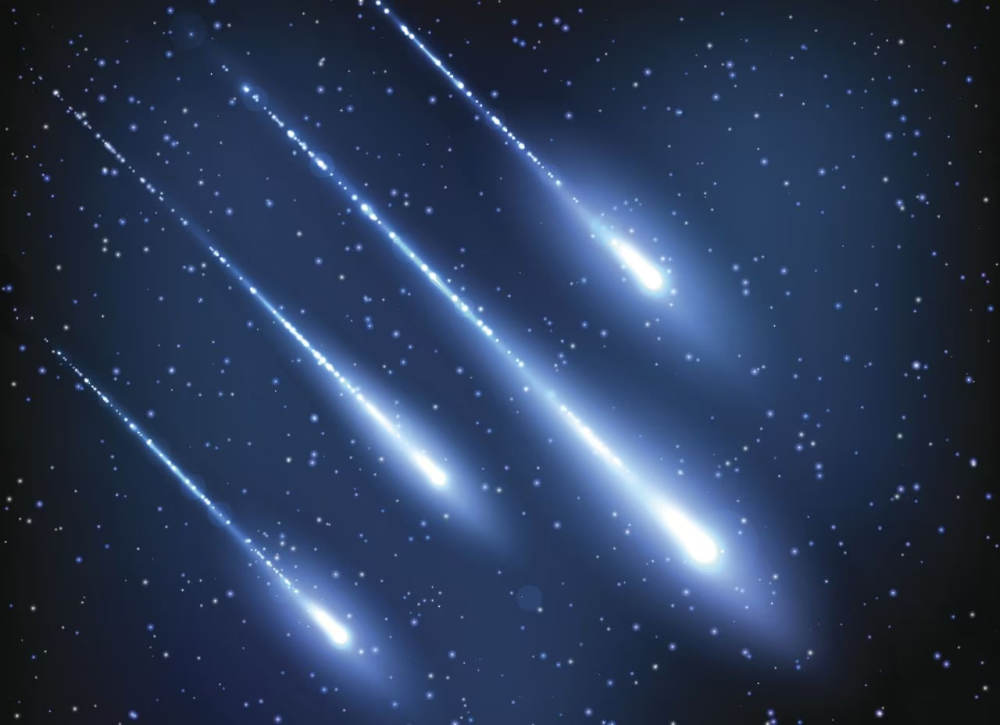
The month of April is ideal for meteor showers. The Lyrids meteor shower, which occurs every year from April 16 to 26. The Eta Aquariids meteor shower, which begins on April 21st, is another one to look out for.
Lyrids, April 22 to 23
Running April 16 to 23, the Lyrids meteor shower is an average shower, offering about 20 shooting stars an hour at the peak. The moon will still be bright, and that may wash out fainter meteors\ but the Lyrids are known to produce bright dust trails that last for several seconds. The Lyrids are produced by dust particles left behind by the comet\ C/1861 G1 Thatcher.
Eta Aquarids, May 6 to 7
This above average meteor shower runs from April 19 to May 28. The best place to see it is in the Southern Hemisphere, where it produces about 60 meteors an hour, but it\’s a decent show in the Northern Hemisphere, too, and viewers in this part of the world can expect to see about half that many.\ Comet Haley\ is the parent of this meteor shower, which has been observed since ancient times.
Delta Aquarids, July 28 to 29
\ This shower runs from July 12 to Aug. 2 and produces about 20 meteors an hour at the peak. A new moon means dark skies, so viewing conditions should be excellent for this shower, which is produced by debris left behind by the\ comets Marsden and Kracht.
Perseids, Aug. 12 to 13
Famous for producing a large number of fireballs, the Perseids meteor shower is regarded as one of the best of the year. The shower runs July 17 to Aug. 24 and produces up to 60 shooting stars an hour at the peak. The shower, discovered in 1862, is produced by the\ comet 109/P Swift-Tuttle. A nearly full moon will cause viewing problems, but the Perseids are so bright that skywatchers should still get a good show.