
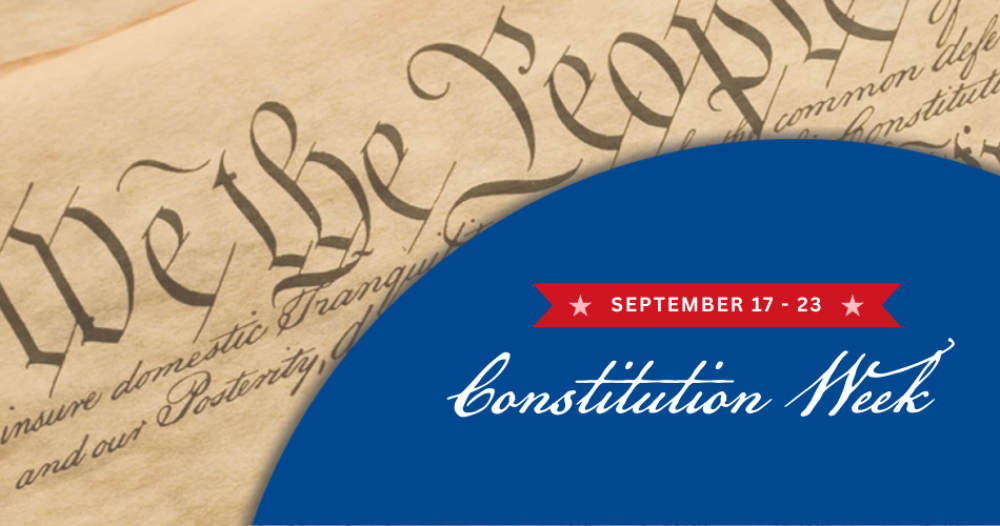
Constitution Week is an official American observance dedicated to celebrating the history, adoption, and lasting impact of the U.S. Constitution. Officially celebrated every year from September 17 to September 23, it encourages citizens to study the foundational document that defines the structure of the federal government and protects individual liberties.
History and Origins
The tradition of celebrating the Constitution was started by the Daughters of the American Revolution (DAR).
- 1955: The DAR petitioned the U.S. Congress to dedicate a specific week to the study and appreciation of the Constitution.
- 1956: President Dwight D. Eisenhower signed the resolution into public law on August 2, 1956, officially establishing the annual national observance.
The week always begins on September 17 (Constitution Day), marking the exact anniversary of the day in 1787 when the delegates of the Constitutional Convention in Philadelphia signed the finished document.
Three Core Purposes of the Observance
As laid out in the original congressional resolution, the week has three distinct aims:
- Emphasize Citizens' Responsibilities: Remind Americans of their role in protecting and defending the Constitution.
- Educate the Public: Inform citizens about the history and structural framework of the document that secures their freedom.
- Celebrate the Document's Longevity: Honor the U.S. Constitution as the oldest written national constitution still in active use today.
Key Themes Addressed During the Week
The Separation of Powers
Educational programs focus on how the Constitution divides government authority into three distinct branches to prevent any single entity from gaining absolute power:
- Legislative Branch (Congress): Makes the laws.
- Executive Branch (President & Cabinet): Enforces the laws.
- Judicial Branch (Supreme Court & Federal Courts): Interprets the laws.
The Bill of Rights
A major point of emphasis is the first 10 amendments to the Constitution, ratified in 1791. These amendments explicitly guarantee fundamental rights, such as:
- Freedom of speech, religion, and the press
- The right to bear arms
- Protection against unreasonable searches and seizures
- The right to a speedy and public trial by jury
The Amendment Process
The week also highlights Article V, which outlines how the Constitution is a "living document." It allows for changes (amendments) over time, a mechanism used only 27 times in history to expand civil rights, change voting protocols, and adapt to modern society.
How the Week is Celebrated
- Schools and Universities: Federal law mandates that all publicly funded educational institutions provide specific educational programming about the U.S. Constitution on or around September 17.
- Naturalization Ceremonies: The federal judiciary routinely schedules large-scale naturalization ceremonies during this week, officially welcoming hundreds of new American citizens as they swear an oath to uphold the Constitution.
- Community Events: Civic groups, libraries, and historical societies host public readings of the Preamble, bell-ringing ceremonies, essay contests, and guest lectures analyzing constitutional law.