
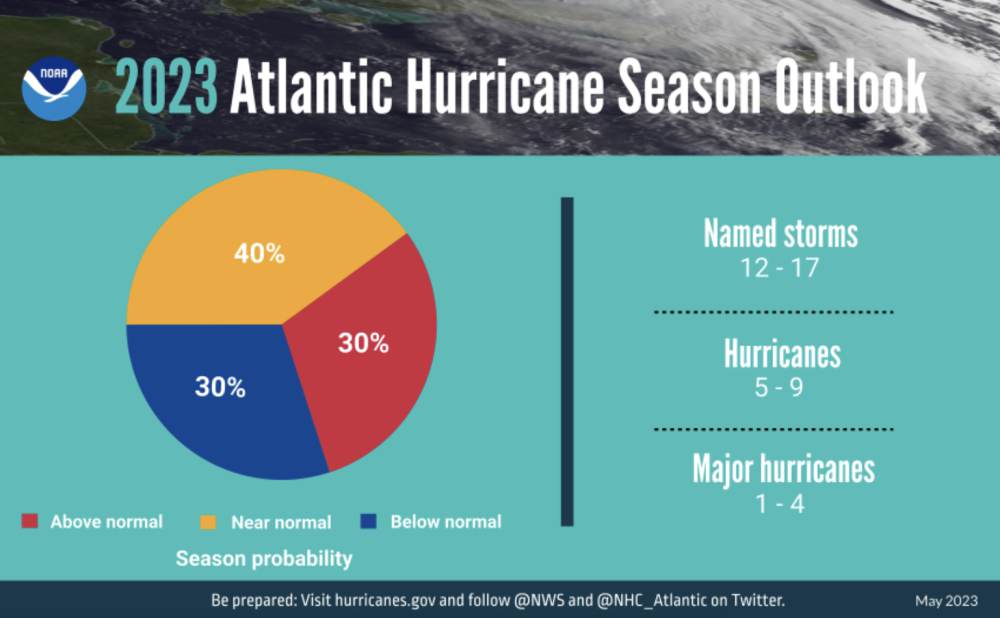
National Oceanic and Atomospheric Administration predicts a near-normal 2023 Atlantic hurricane season.\ El Nino, above-average Atlantic Ocean temperatures set the stage.\ \
The upcoming Atlantic hurricane season is expected to be less active than recent years, due to competing factors, some that suppress storm development and some that fuel it,\ \ driving this year\'s overall forecast for a near-normal season.\ \ The outlook for the 2023 Atlantic hurricane season, which goes from June 1 to November 30, predicts a 40% chance of a near-normal season, a 30% chance of an above-normal season and a 30% chance of a below-normal season.
STEPS FOR OLDER ADULTS
Understand how your medical, physical and cognitive needs may affect your ability to respond to an emergency.
Consider what you may need if the power goesout, you have to stay home for two weeks or more, or if you have to evacuate.
What help do you need and who can help you.
Identify helpers ─ include family, friends, neighbors, caregivers and care providers to build your network of people who may be able to assist you or that you can assist.
Meet with your helpers to assess your needs and plan together.
If you require power to operate medical devices or keep medicines cold, make a back-up plan.
Keep at least 30 days of medications and extra items such as a cane or eyeglasses. Plan for your food needs if you follow a special diet.
Get batteries to back up devices that require power.
Keep an up-to-date list of medical information ─ conditions, allergies, medications, prescription records, doctors and insurance cards.
PEOPLE WITH DISABILITIES
Mobility, hearing, learning, or seeing disabilities can create specific needs for individuals responding to an emergency
Create a personal support network and make a plan after thinking about these topics:
Do you regularly need assistance with personal care? Do you use adaptive equipment to help you get dressed? Do you use a shower chair, tub-transfer bench or other similar equipment? Do you use special utensils that help you prepare or eat food independently?
How will you continue to use equipment that runs on electricity.? Do you have a safe back-up power supply and how long will it last?
Do you need a specially equipped vehicle or accessible transportation?
Do you need help leaving to your home or office? Can you reach and activate an alarm? Will you be able to evacuate independently? How will you call for help to leave the building?
Will you be able to care for your service animal during and after a disaster?
If you use a wheelchair, make exits from your home wheelchair accessible. If you use an electric wheelchair or scooter, have a manual wheelchair for back-up.
Know how to connect and start a back-up power supply for your essential medical equipment.
If you are vision impaired, deaf or hard of hearing, plan ahead for someone to convey essential emergency information to you if you are unable to use the TV or radio.
CREATE A PET EMERGENCY PLAN
The Red Cross encourages people to develop emergency preparedness plans for themselves and their pets. When possible, Red Cross shelter workers will do all they can to accommodate domesticated pets comfortably, however, depending on the situation, pets may need to be housed in a different location. Service animals that assist people with disabilities are allowed in Red Cross shelters.
Create a pet emergency plan:
Know which hotels and motels along your evacuation route will accept pets in an emergency. Call ahead for reservations if you know you may need to evacuate. Ask if no-pet policies could be waived in an emergency.
Know which friends, relatives, boarding facilities, animal shelters or veterinarians can care for your animals in an emergency. Prepare a list with phone numbers.
Include your pets in evacuation drills so that they become used to entering and traveling in their carriers calmly.
Make sure that your pet\’s vaccinations are current and that all dogs and cats are wearing collars with securely fastened, up-to-date identification.
Consider having your pet \“microchipped\” by your veterinarian.
Create a pet emergency kit ─ place the following items in a sturdy, easy-to-carry container:
Sturdy leashes, harnesses and/or carriers to transport pets safely and ensure that they can\’t escape.
Food, drinking water, bowls, cat litter/pan and a manual can opener if your pet eats canned food.
Medications and copies of medical records stored in a waterproof container.
A first aid kit.
Current photos of you with your pet(s) in case they get lost. Since many pets look alike, this will help to eliminate mistaken identity and confusion.
Information on feeding schedules, medical conditions, behavior problems, and the name and number of your veterinarian in case you have to foster or board your pets.
Pet beds and toys, if easily transportable.
\