
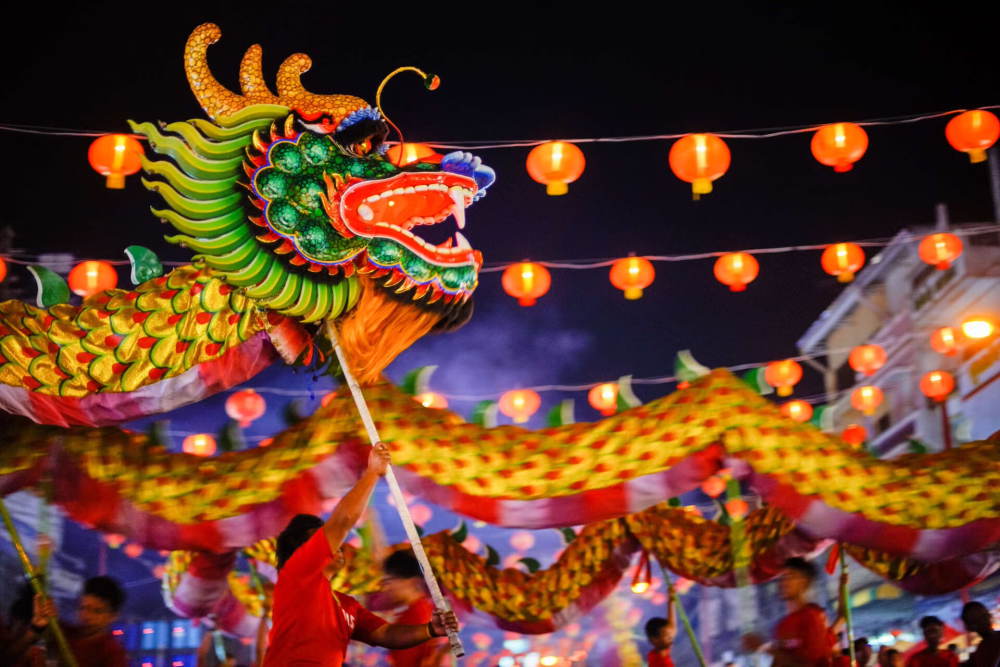
Lunar New Year\ marks the start of the new year on lunisolar calendars, celebrated across Asia and by Asian communities worldwide, typically between late January and mid-February, symbolizing new beginnings, family reunion, and bidding farewell to the old year for good fortune in the new.\ It\'s observed with feasting, cleaning, decorating with red, honoring ancestors, and traditions like red envelopes and lantern festivals, with each year associated with one of 12 zodiac animals, like the Horse in 2026.
Key aspects
-
Calendar:\
It follows lunisolar calendars, not the Gregorian calendar, so the date changes yearly but stays within a similar timeframe.
-
Importance:\
It\'s the most significant holiday for billions, focusing on family, prosperity, and new beginnings.
-
Traditions:
- Preparation:\ Thorough house cleaning to sweep out bad luck, decorating with red for good fortune.
- Feasting:\ Reunion dinners with symbolic foods like long-life noodles and whole fish.\
- Festivities:\ Giving red envelopes\ (h\óngbāo), fireworks, lion/dragon dances, and visiting relatives.
- End:\ Culminates in the 15th day with the\ Lantern Festival.
-
Who celebrates:\
Many cultures, including Chinese, Vietnamese (with a cat instead of rabbit), Korean, and others, celebrate variations of it.