
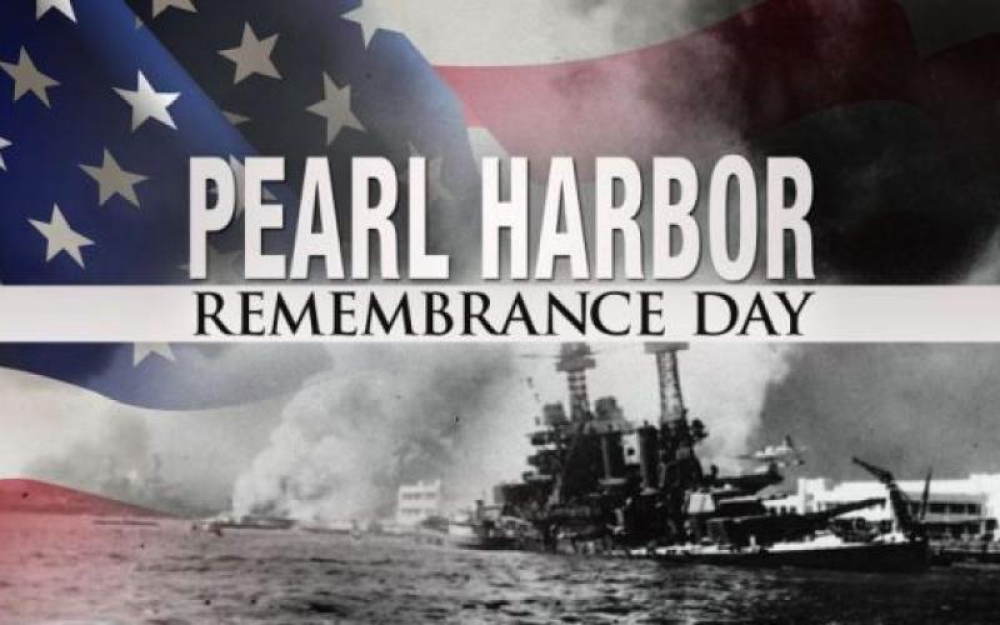
Remember Pearl Harbor was a rallying cry and popular slogan in the United States following the surprise Japanese attack on December 7, 1941, which propelled the nation into World War II. The phrase is used to commemorate the attack, honor the lives lost, and serve as a reminder of national trauma, sacrifice, and the importance of preparedness. The slogan inspired songs, films, and other cultural works, and is still invoked today when remembering the attack, particularly on National Pearl Harbor Remembrance Day. \
Historical significance
- The attack: On December 7, 1941, Japan launched a surprise military strike on the U.S. naval base at Pearl Harbor, Hawaii. The attack killed 2,403 Americans and injured over 1,100 more, crippling the Pacific Fleet and leading the U.S. to declare war on Japan the next day.\
- A national battle cry: \"Remember Pearl Harbor!\" became the defiant slogan that united Americans and galvanized public support for entering World War II. It became a powerful symbol of the need for national defense and a call to action against a national trauma.\
- Cultural impact
- Patriotic song: A patriotic march titled \"Remember Pearl Harbor\" was written by Sammy Kaye and Don Reid in the week following the attack. The song became a popular hit in 1942.\
- Propaganda and media: The slogan was heavily used in propaganda, including the \"Remember Dec. 7th!\" poster from the Office of War Information. It also served as the title and theme for various films and documentaries produced during and after the war to keep the memory alive.\
- Modern remembrance
- Annual commemoration: Every year, the anniversary of the attack is recognized on December 7th as National Pearl Harbor Remembrance Day. Survivors, veterans, and visitors gather at the Pearl Harbor National Memorial and other locations to honor those who were killed.\
- Enduring symbol: The phrase is still used to evoke the shock and horror of the attack and to emphasize the importance of sacrifice and vigilance. It is often used as a cautionary tale in contexts of surprise attacks or national security threats.\