
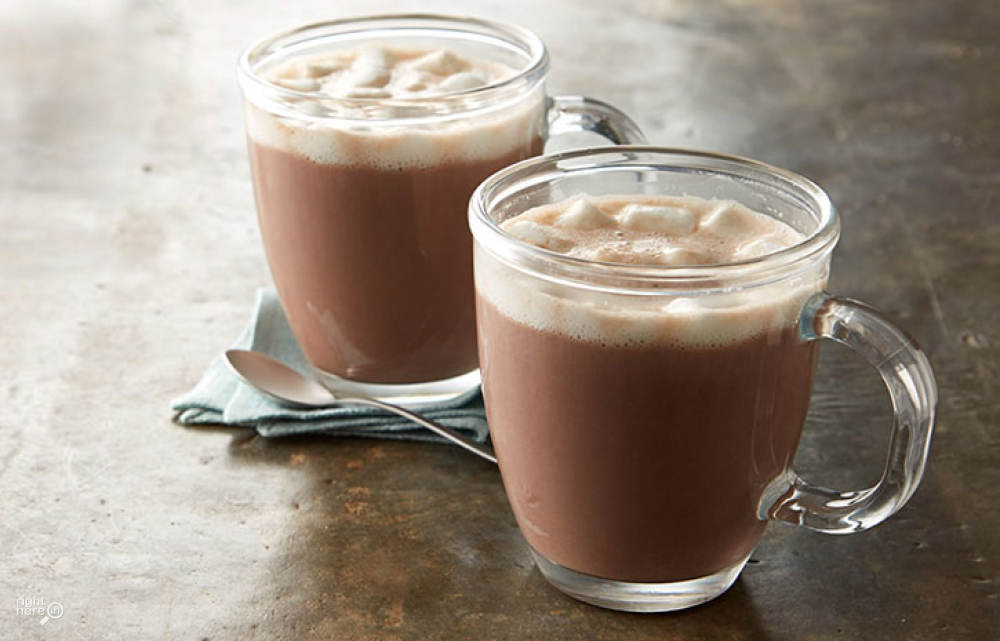
January 31st is National Hot Chocolate Day! What could be better on a cold wintry day or night than a steaming hot cup of Hot Chocolate? Few beverages are as deep-rooted in the culture of Americans\’ collective childhood quite like hot chocolate. This drink reminds us of winter days spent skiing, sledding, or even a quiet day watching the snowfall.
Hot chocolate\’s history goes quite a way back. The drink has changed over the years, evolving from cold and spicy to warm and sweet and with hundreds of variations.\
Reasons to Celebrate National Hot Chocolate Day
It\’s the perfect winter drink
When it\’s cold outside, staying cozy by the fire with a mug of hot chocolate between our hands is one of our favorite winter traditions. And let\’s be real \– when all you need is a little snuggle and warmth, this drink warms your whole body and tastes luxurious too!
It\’s good for you
Chocolate contains many vitamins, minerals, antioxidants and biochemical compounds\—all of which help give our body a satisfying health boost. Hot chocolate even increases the microcirculation in your skin. Who knew a hot chocolate obsession could be so good for our health?
It boosts your mood
When we drink hot chocolate, its chemical compounds signal the brain to release endorphins and serotonin, which elicit our feelings of calmness. These neurotransmitters work to reduce pain and stress, keeping us worry-free and happy! Hot chocolate is clearly happiness in a cup.
Make Your Own Hot Chocolate:
Ingredients
- Miniature marshmallows or sweetened whipped cream (optional)
- 1/2 cup sugar
- 1/4 cup HERSHEY\’S Cocoa
- Dash of salt
- 3/4 teaspoon vanilla extract
- 4 cups (1 qt.) milk
- 1/3 cup hot water
Directions
1. Stir together sugar, cocoa, and salt in a medium saucepan; stir in water. Cook over medium heat, stirring constantly until mixture comes to a boil. Boil and stir for 2 minutes. Add milk; stirring constantly, heat to serving temperature. Do Not Boil.
2. Remove from heat; add vanilla. Beat with rotary beater or whisk until foamy. Serve topped with marshmallows or whipped cream, if desired. Makes Five 8-oz. servings.
VARIATIONS: Add one of the following with the vanilla extract:
SPICED COCOA: 1/8 teaspoon ground cinnamon and 1/8 teaspoon ground nutmeg. Serve with a cinnamon stick, if desired.
MINT COCOA: 1/2 teaspoon mint extract OR 3 tablespoons crushed hard peppermint candy OR 2 to 3 tablespoons white creme de menthe. Serve with peppermint candy stick, if desired.
CITRUS COCOA: 1/2 teaspoon orange extract OR 2 to 3 tablespoons orange liqueur.
SWISS MOCHA: 2 to 2-1/2 teaspoons powdered instant coffee
COCOA AU LAIT: Omit marshmallows or whipped cream. Spoon 2 tablespoons of softened vanilla ice cream on top of each cup of cocoa at serving time.
SLIM-TRIM COCOA: Omit sugar. Combine cocoa, salt, and water; substitute nonfat milk. Proceed as above. With vanilla, stir in sugar substitute with sweetening equivalence of 1/2 cup sugar.
CANADIAN COCOA: 1/2 teaspoon maple extract.
The History of Hot Chocolate
As early as 500 BC, the Mayans were drinking chocolate made from ground-up cocoa seeds mixed with water, cornmeal, and chili peppers (as well as other ingredients)\—a much different version from the hot chocolate we know today. They would mix the drink by pouring it back and forth from a cup to a pot until a thick foam developed, and then enjoyed the beverage cold. Although the chocolate drink was available to all classes of people, the wealthy would drink it from large vessels with spouts, which later would be buried along with them.
In the early 1500s, the explorer Cortez brought cocoa beans and the chocolate drink-making tools to Europe. Although the drink still remained cold and bitter-tasting, it gained popularity and was adopted by the court of King Charles V as well as the Spanish upper class. After its introduction in Spain, the drink began to be served hot, sweetened, and without the chili peppers. The Spanish were very protective of their wonderful new beverage, and it was over a hundred years before news of it began to spread across Europe.
When it hit London in the 1700s, chocolate houses (similar to today\’s coffee shops) became popular and very trendy, even though chocolate was very expensive. In the late 1700s, the president of the Royal College of Physicians, Hans Sloane, brought back a Jamaican recipe for mixing chocolate with milk, which made the drink more palatable in his opinion. Others agreed and the English started adding milk to their chocolate; it was then enjoyed as an after-dinner beverage.
Up until the 19th century, hot chocolate was used as a treatment for stomach and liver diseases as well as a special drink. Today, however, we simply treat this warm concoction as a beverage to sip and savor. Hot chocolate has become so popular in the United States that it is available in coffee vending machines. The powder is sold in packets and canisters, and coffee houses often have rich, somewhat thicker varieties on their menus.