
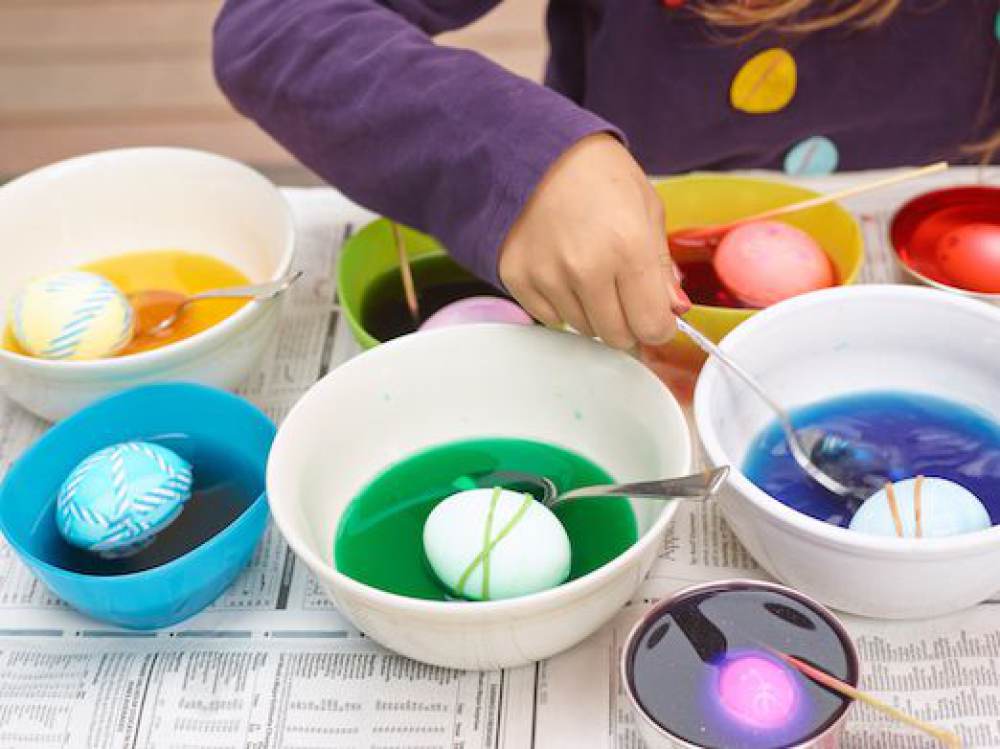
To achieve vibrant and evenly dyed Easter eggs, ensure hard-boiled eggs are cooled to room temperature before dyeing. Follow these 10 tips.\ Use a solution of hot water, white vinegar, and food coloring, adjusting the concentration of food coloring for desired color intensity.\ Submerge eggs in the dye solution and check the color periodically, adjusting soaking time for desired depth.\
Tips for Dying Easter Eggs:
-
Prepare Dye Solution:
Mix hot water, vinegar, and food coloring in a heat-safe bowl or cup.\
-
Submerge Eggs:
Use tongs or a spoon to gently submerge eggs in the dye solution.\ Ensure the egg is completely covered.\
-
Adjust Soaking Time:
Check the color periodically and adjust the soaking time for desired depth.\ Longer soaking times result in deeper colors.\
-
Natural Dyes:
Explore natural dyes using ingredients like red cabbage, turmeric, or beets for unique colors, as mentioned in\ a Reddit post.\
-
Design Techniques:
Use rubber cement, leaves, or other materials to create patterns on your eggs, as suggested in\ a Reddit post.\
-
Shaving Cream Dyeing:
Create marble-like effects by mixing shaving cream with food coloring and applying it to the eggs, as described in\ a Reddit post.\
-
Edible Whipped Cream Dyeing:
For an edible alternative to shaving cream, use whipped topping and food coloring, as detailed in\ an Instagram post.\
-
Test for Sinkability:
Before dying, test eggs in water to ensure they sink, as recommended in\ a recipe on Allrecipes.\
-
Protect Surfaces:
Cover your work surface with a tarp, newspaper, or paper towels to prevent staining, as suggested by\ Real Simple.\
-
Cool Eggs:
Let hard-boiled eggs cool to room temperature before dyeing.\ This helps the dye adhere better and prevents over-saturation.\