
Article information sourced from NCpedia.org, Wonderopolis.org, CoastalReview.org, NOAA.gov and GraveyardoftheAtlantic.com
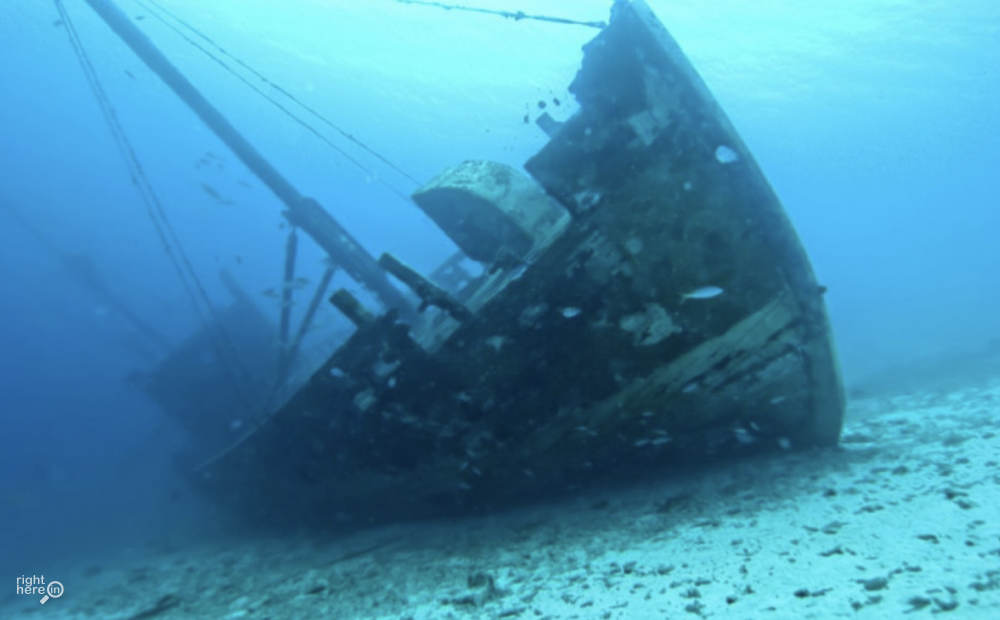
North Carolina\’s coastline is often referred to as the \“Graveyard of the Atlantic\”, the Atlantic Ocean along the North Carolina coast has been the backdrop for an unusually large number of shipwrecks. The warm waters of the northbound Gulf Stream meet the cold waters of the Arctic Current off Cape Hatteras at Diamond Shoals, and the entire coast is an area of shifting inlets, bays, and capes, making this coastline an obstacle course for maritime navigation

As a result of these strong currents, sandbars shift, making it hard to steer ships. It\’s said that Blackbeard the Pirate used these to his advantage to avoid capture from enemies. There is no doubt that this section of the Atlantic Ocean is extremely dangerous. The ocean floor in this area contains the relics of thousands of ships. Blackbeard\’s ship, Queen Anne\’s Revenge, was discovered here in 1996. Parts of the ship are on display at the North Carolina Maritime Museum.
The first recorded shipwreck in the area took place in 1526. Explorers were attracted to the mouth of the Cape Fear River. It quickly became known as a dangerous spot for mariners. Legend has it that the wild Spanish mustangs of the Outer Banks got there by swimming from sinking ships.
Numerous other relics rest on the bottom of the ocean floor including a fleet of Spanish treasure ships, returning to Europe after successful raids in the Caribbean in 1750 only to encounter a hurricane and end up strewn along the North Carolina coast. There is the coastal steamer Pulaski, lost on the Charleston-to-Baltimore run when it wrecked on the beach at Ocracoke in 1838 with the loss of 100 passengers and crewmen. Among other notable remains are those of sleek Civil War blockade-runners that failed in their effort to sneak into the Cape Fear River under the cover of darkness; the little ironclad Monitor, the \“cheesebox on a raft,\” sunk off Cape Hatteras while being towed south following her famous battle with the Merrimac; and the United States gunboat Huron, run aground at Nags Head through navigational error, with the count of lost crewmen reaching 103.
After so many shipwrecks, the government stepped in. It built lifesaving stations every seven miles along the coast of the Outer Banks. And while these might have lessened the damage done it certainly didn\’t stop it.
There have been many other recorded shipwrecks in North Carolina\’s Graveyard of the Atlantic. Modern underwater searching equipment has brought the current estimate to the neighborhood of 2,000. They range from the tanker Mirlo, lost off Chicamacomico in 1918 after hitting a German mine, to larger tankers-a total of more than two dozen of them-sunk by Nazi submarines in 1942, including six in the course of one terrible day and night within sight of Cape Hatteras.
A large number of doomed ships in the days of sail were schooners, but there was a fair sampling of everything from barks, brigs, and brigantines to a clipper ship and a pilot boat. Among the more modern craft lost were freighters, trawlers, barges, lightships, and even two battleships sunk by aircraft off Cape Hatteras.
Despite the widespread publicity given to North Carolina\’s deadly coastline, it does have competition. The shoreline of Sable Island, off Nova Scotia, is so littered with shipwrecks that it, too, has earned the name \“Graveyard of the Atlantic.\”