
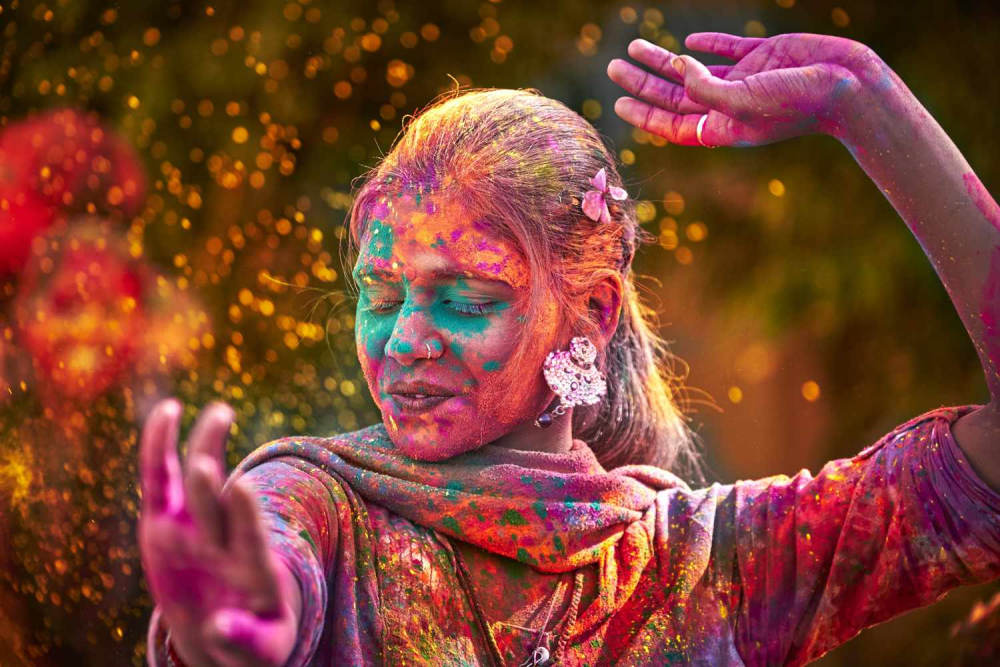
Holi,\ the vibrant Hindu \"Festival of Colors\" and \"Festival of Love,\" marks the arrival of spring and the triumph of good over evil. Celebrated over two days in March (March 3-4, 2026), it involves lighting bonfires (Holika Dahan) and, on the main day, playfully throwing colored powders (gulal) and water on friends and family.\
Key Details About Holi
- Significance:\ Celebrates the victory of good over evil (specifically, the story of Prahlad and Holika) and the divine love between Radha and Krishna.
- Celebration Methods:\ People gather in streets, throwing colored powders, using water guns (pichkaris), dancing, and singing.
- Traditions:\ Key traditions include the\ Holika Dahan\ bonfire the night before, sharing traditional sweets like\ gujia, and repairing relationships.
- Date:\ It is celebrated on the full moon day (Purnima) in the Hindu month of Phalguna, usually falling in March. In 2026, it is observed on March 3-4.
- Names:\ Known as the Festival of Colors, Festival of Love, and, in some regions,\ Dol Jatra\ or\ Basant Utsav.\
Key Legends
- Holika and Prahlad:\ The demoness Holika tried to burn her nephew Prahlad, a devotee of Vishnu. Through divine intervention, Prahlad was saved while Holika perished, symbolizing the victory of good over evil.
- Radha and Krishna:\ Krishna, concerned about his dark complexion compared to Radha\'s, applied color to her face, starting the tradition of playing with colors.\