
Submitted by Robert Malkin, Professor of the Practice of Biomedical Engineering and Global Health, Emeritus
New research creates headlines announcing a new treatment or discovery in space or on earth nearly every month. But, how do we know what\'s happening to stars light-years away or how a new treatment is effective here on earth? What are the steps to conduct such research? Who is involved?
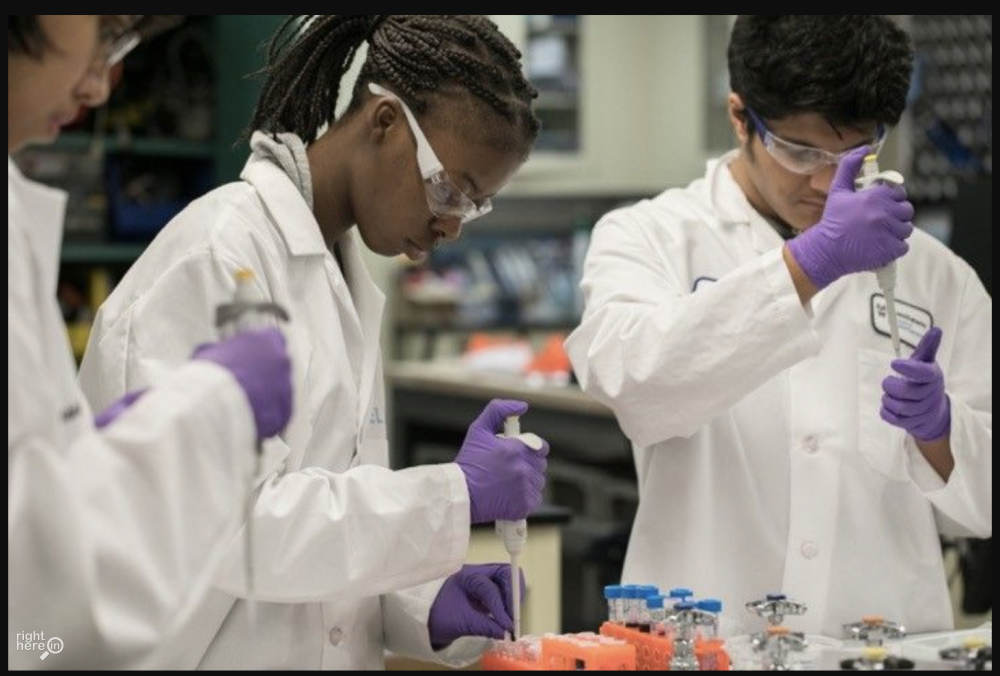
Traditionally, a few lucky high school students have been able to join university faculty in\ laboratories to learn how knowledge is generated. \ They expanded their understanding of
\ science, explored a new field and boosted their resume. \ Now, The International Research\ Institute of North Carolina (IRI-NC) is bringing this opportunity to everyone.
We are one of the world\'s only fully-remote, science research laboratories that \ welcomes high school students to work with university faculty, not just graduate students or candidates.
Participants that join an IRI lab will attend lab meetings, \ conduct literature searches, create\ research tools, perform data collection, and have the opportunity to publish their findings in\
peer-reviewed, scientific journals. \ With our emphasis on human subjects research in areas\ such as global health, radiation oncology, neuroscience, biomedicine, and genetics, our labs
are a perfect match for high school students interested in the health sciences, such as medicine, nursing, biomedical engineering or pharmacy. But we also have laboratories focused
on psychology and engineering, among other many other areas.
In addition to working with individual students, we also have club and classroom models that can engage students in groups. You can find our fall brochure here, to get a deeper\ understanding of our offerings.
Would this opportunity be right for your students? When would be a good time to talk about the\ options? \ Feel free to visit our website or email \ or call\ \ with any questions you might have.
\