
\ A recent Brookings Institute report estimates that by 2020 65% of jobs will require some form of postsecondary education, with a high school diploma as a prerequisite. According to the U.S. Census Bureau, 85.8% of North Carolinians have completed high school, and 28.4% have completed a bachelor\'s degree or higher.\ Eight out of 10 young people expect to attain a bachelor\'s degree or higher, according to the U.S. Department of Education. However, despite their aspirations, low-income students and those who are the first in their families to pursue higher education are severely underrepresented on college campuses. \ Studies show these students often lack the guidance they need to prepare for postsecondary education. Research shows that taking middle-grade\ students to\ institutions of postsecondary education can\ help\ students make the connection between the careers they aspire towards and the role of a postsecondary degree.\ \ \
Additionally. The Sallie Mae Fund recommends that information should target students and parents in the middle grades, so they can select curricula that are stepping-stone courses to graduate high school fully qualified for college.\ \ \
Preparing students for post-secondary education goes beyond their awareness of and opportunities for financial aid. While efforts to provide and communicate financial support options to low-income students have increased over the past\ two decades, the 30% gap in\ college enrollment between low-income and middle- to upper-class students has\ persisted since the 1960s.
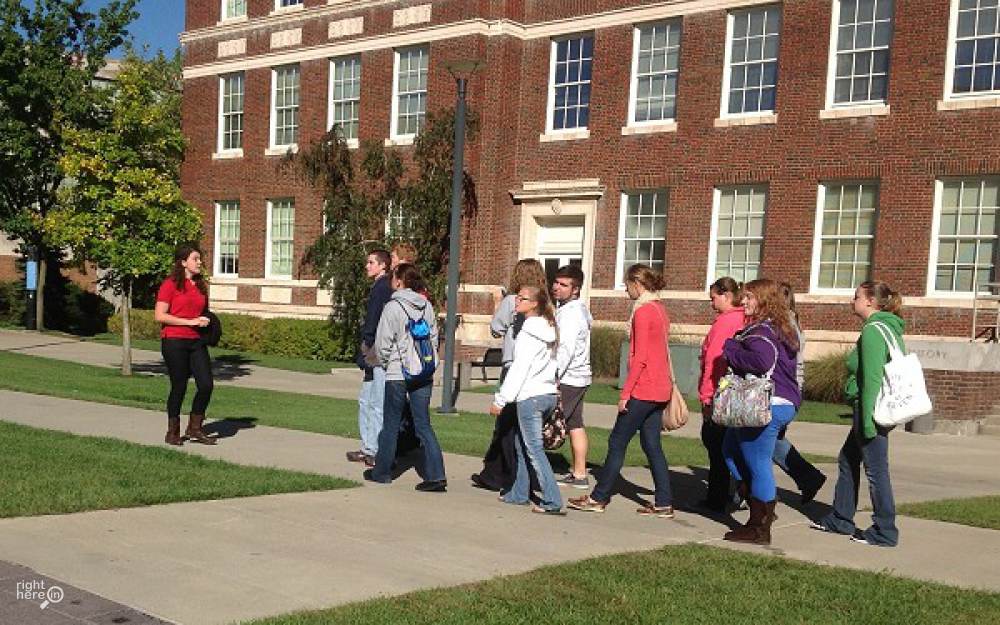
This trend in disproportionate attendance in higher education is also prevalent for minorities and second language learners. Information about and availability of student financial aid is not enough to support students\’ matriculation to postsecondary educational opportunities. \ Students must be provided early academic, social, and psychological supports in order to be prepared for and to succeed in postsecondary education. Important precollege strategies must begin before high school and include opportunities to visit college campuses. Strategies for increasing rates of college enrollment and enhancing preparation for postsecondary education start before high school and provide opportunities for college awareness and exposure in addition to academic support. Campus visits can provide the most powerful means for middle school students to envision their own place in Institutions of Higher Education (IHEs), and early exposure to college campuses is a strategy widely used by most \"early preparation for college\" programs for underrepresented groups.
Important precollege strategies must begin before high school.
Working with parents is another crucial strategy used by programs to support students from underrepresented groups in their visioning for college education.\ Including parents in campus visits and discussing what it takes to prepare for college are important for supporting students\’ understanding of what it takes to matriculate and what their place may be in higher education. While parents can be provided with basic information about how to help their child\ pay for college, the\ focus on early experiences needs to be on exposure to and envisioning of their children becoming part of a college community. Successful pre-college programs work best when they are coordinated with local schools and work collaboratively with school and district personnel. \ From identifying students to recruiting participants for campus visits, schools have a role in ensuring the right students are \“on the bus.\” Similarly, working with IHEs is important in providing quality experiences for students while on campus. Campus visits should address social, psychological, academic, and financial aspects of student success. Visiting residence halls, cafeterias, and athletic facilities can be as important for helping young students envision their place on a college campus as information about the courses they need to take to prepare themselves academically for success in higher education. Talking with students from similar backgrounds can also help middle school students recognize his/her potential for success in college. Role models are powerful motivators for students as they begin to envision their preparation for and matriculation at college.
Value of College Visit\
- Students who went on a campus visit had more positive perceptions of college than those who did not.\
- The Executive Office of the President of the United States (2014) has identified college visits as one promising practice to reach more low-income\ students in order to bridge the income gap in college access.\
- A 2007 Eduventures study reports that \“campus visits are among the most impactful recruiting and yield activities in the higher education market, and that first-generation and low-SES students participate in such visits at far lower rates than other students.\”
- Hosting eighth graders on campus helped them to:\ get excited about pursuing education beyond high school; identify their strengths and interests; identify degree programs that suit their career interests; learn which type of college will best fit their needs; and learn about college costs\—and how to pay for college.