
Information gathered from FarmersAlmanac.com
When we think of Easter we think of baskets of colored eggs and chocolate goodies delivered by the Easter Bunny. The holiday of course celebrates the resurrection of Jesus, but just exactly how did we tie colorful eggs and bunnies into this yearly spring holiday?\
Where Did The Easter Bunny Originate?
In 16th century literature, there are accounts of a bunny who, each spring, would reward those who were good with eggs. The first edible Easter rabbits, made out of pastry and sugar, were made in Germany during the early 1800s.
Prior to the Christian holiday of Easter, the hare and rabbit showed up often in pre-Christian fertility lore. These animals often served as symbols of new life during the spring season.
How the Easter Bunny tradition began isn\’t entirely clear; however, Germany has been credited with the origin of associating a bunny with Easter.
In America, the Easter Bunny was introduced by the German settlers who arrived in the Pennsylvania Dutch country during the 1700s. The arrival of what they referred to the bunny as \“Oschter Haws\” was considered \“childhood\’s greatest pleasure\” next to a visit from Christ-Kindel on Christmas Eve. The children believed that if they were good the Oschter Haws would lay a nest of colored eggs.
The children would build their nest in a secluded place in the home, the barn or the garden. Boys would use their caps and girls their bonnets to make the nests. The use of elaborate baskets would come later as the tradition of the Easter bunny spread throughout the country.
Why Do We Color Easter Eggs?
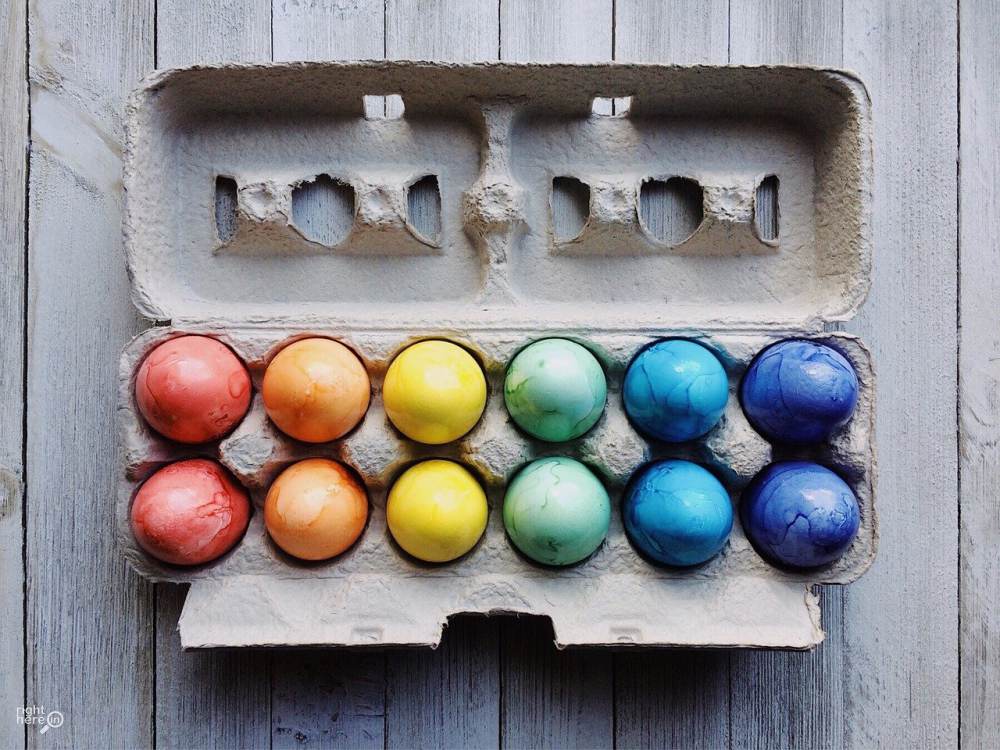
Originally, the Persians and then the ancient Egyptians, exchanged colored eggs to celebrate the return of spring. They also used those decorated eggs as tokens of goodwill. The eggs were often colored a bright red to signify blood and the life force.
Later, the Greeks adopted the custom and used colored eggs during their spring festivals as a sign of fertility and of the regenerative power of nature. During Cleopatra\’s reign, around 50 B.C., Egyptians and Romans colored eggs as part of their spring festivals.
The custom started disappearing in Europe when the Pennsylvania Dutch brought it to the New World in the 1700s. But the tradition didn\’t catch on right away. By 1880, the Pennsylvania Dutch and the Ukrainians were the only ethnic groups in this country who, in any real number, still observed this quaint festivity.
Because egg dying was a time-consuming practice back then, many people didn\’t have the time or resources to participate in the tradition. Unlike today, most Easter eggs were colored by boiling them with onions skins for a yellow color, hickory bark for shades of brown, madder root for red and other materials such as coffee, walnut hulls, green wheat and beets for varying colors. Dyes such as indigo, logwood, and gamboges were also used, but you had to go out and buy these dyes.
William M. Townley, a druggist at a New Jersey store, sold the dyes. One year, Townley came up with the idea of packaging his dyes, after he spilled some powdered indigo on a suit and ruined it. After that incident, he had his shop boy take the dyes to the backyard of the shop and measure and prepackage the various dyes used for Easter eggs.
This made coloring eggs easier and more convenient, and also helped renew this custom which is still observed today.