
The Novel Corona virus, now renamed COVID-19, is a respiratory disease that was first detected in Wuhan City, Hubei Province, China.
On March 3, the North Carolina Division of Public Health\ confirmed the state\’s first \“presumptive positive\” result\ for COVID-19 in Wake County. The result is pending confirmation testing at the Centers for Disease Control and Prevention.
At this point in time, the risk of becoming infected with COVID-19 in North Carolina is still low. However, there are measures that you can and should take to remain healthy.
These include:
- Staying home if you are ill
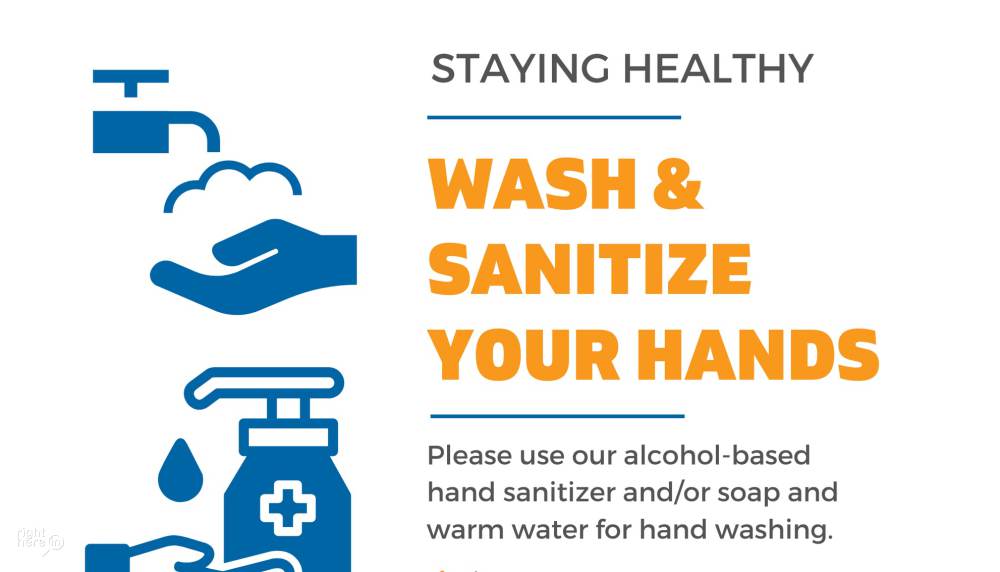
- Washing your hands frequently with soap and water
- Cleaning and disinfecting surfaces that are frequently touched
- Avoiding touching your eyes, nose and mouth
- Covering your mouth and nose with a tissue
- Discarding tissues after a single use
- Following the\ CDC\'s travel guidance
If you have specific questions about COVID-19 and your risk, you can email\ covid19.questions@wakegov.com\ or call 919-856-7044.\
What Wake County is Doing
Wake County Public Health is partnering with the\ N.C. Department of Health and Human Services\ and\ following the guidance of the Centers for Disease Control and Prevention, which has been working to implement a containment strategy within the U.S. To date, those efforts have been successful, but given the current situation and the continued spread of COVID-19, the CDC has recommended more stringent guidance on containment \– and is also preparing for the likelihood of spread within U.S. communities.
We continue to monitor the situation and are working to prepare our community as advised by the CDC. Rest assured that Wake County Public Health will also continue to work in lockstep with the CDC, the N.C. Department of Health and Human Services, and our partners on a coordinated public health response should one need to be implemented as a result of COVID-19.
For up-to-date information on COVID-19, visit the\ CDC\’s website.
Resources for More Information
- N.C. Department of Health and Human Services
- Frequently Asked Questions from NCDHHS
- The Centers for Disease Control and Prevention
- Frequently Asked Questions from CDC